
Warning
Problem: The current name of your GitHub Pages repository ("Solution: Please consider renaming the repository to "
http://".
However, if the current repository name is intended, you can ignore this message by removing "{% include widgets/debug_repo_name.html %}" in index.html.
Action required
Problem: The current root path of this site is "baseurl ("_config.yml.
Solution: Please set the
baseurl in _config.yml to "Education
-
 PhD Cancer GenomicsUppsala University
Faculty of MedicineUppsala, Sweden
10/2021 - present -
MSc BioinformaticsUppsala University
Faculty of Science and TechnologyUppsala, Sweden
09/2019 - 06/2021 -
 BSc Food Science and BiotechnologyBOKU UniversityVienna, Austria
09/2015 - 05/2019 -
 ERASMUS+ exchange semesterUniversity of GalwayGalway, Ireland
01/2018 - 05/2018
Experience
-
PhD studentUppsala, Sweden
10/2021 - present -
Research AssistantUppsala, Sweden
07/2020 - 09/2021 -
Master's degree projectUppsala, Sweden
11/2020 - 06/2021 -
 InternshipAIT Austrian Institute of Technology
Center for Health and BioresourcesTulln, Austria
08/2018 - 10/2018
Selected Publications (view all )
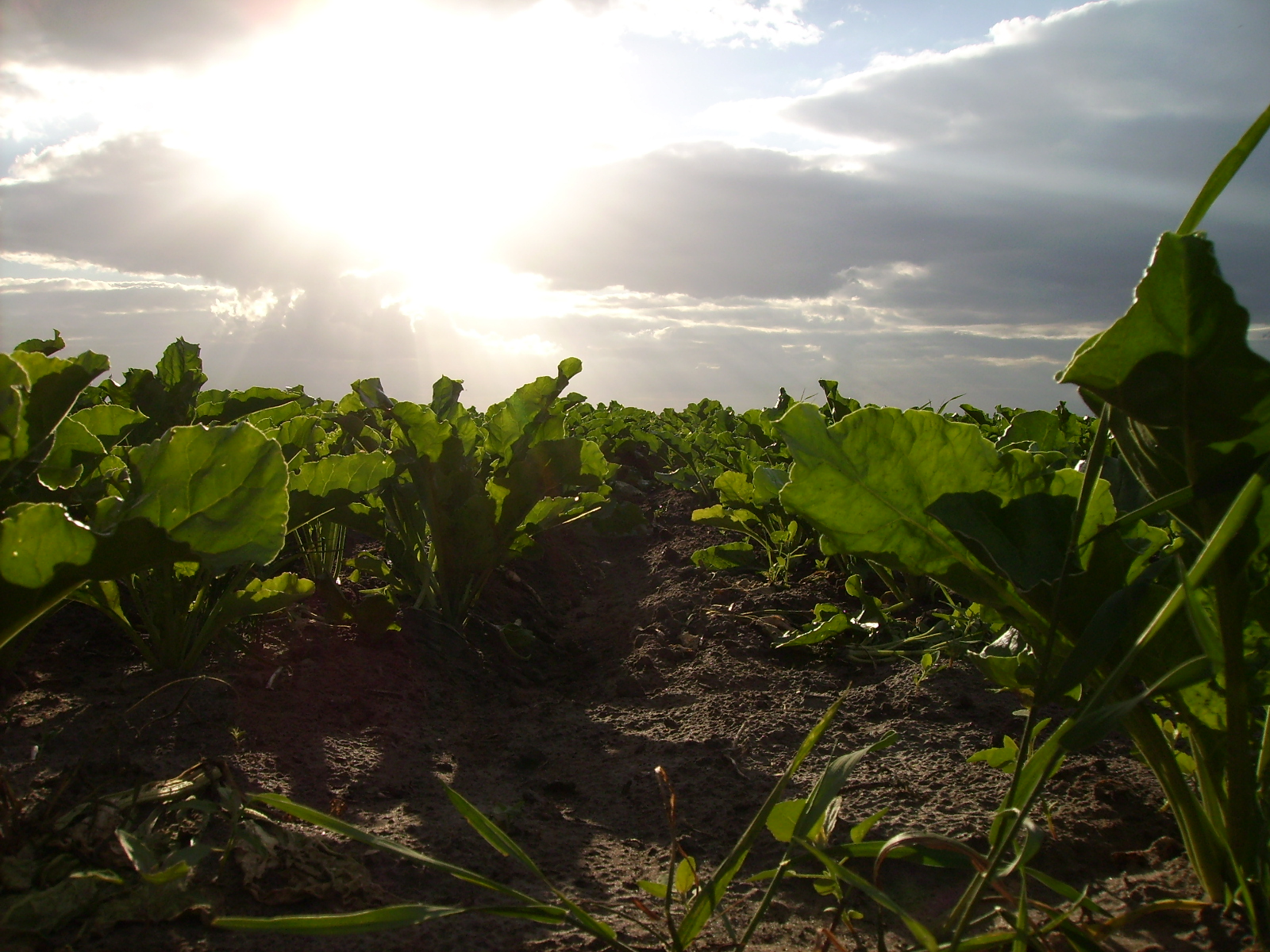
Sugar beet long-read reference assembly of genotype KWS2320
Juliane C. Dohm, Thomas Holzweber, Raphaela Pensch, Heinz Himmelbauer
NAR Genomics and Bioinformatics 2025
Sugar beet (Beta vulgaris ssp. vulgaris) is an important crop plant serving as a major source of sugar, particularly in Europe. Sugar beet research using the genotype KWS2320 has a long-standing history, and many datasets and studies exist that use this genotype as a reference. Here, we present a high-quality genome sequence of sugar beet genotype KWS2320 based on long-read sequencing data as well as an evidence-based gene set employing billions of mRNA (messenger RNA)-seq reads as transcript evidence. The assembly, referred to as RefBeet-3.0, was built using Pacific Biosciences data and was integrated with Bionano optical maps, Oxford Nanopore data, and various additional genomic resources. RefBeet-3.0 comprises 648 Mb in nine pseudochromosomes and further sequences with a total N50 size of 61.5 Mb. The gene set BeetSet-3 consists of 28 271 genes of which 25 824 could be functionally annotated based on sequence homology to orthologous groups. The assembly is highly complete and has a high sequence accuracy in absolute terms and in comparison to existing sugar beet assemblies. RefBeet-3.0 and BeetSet-3 will serve as comprehensive resources for future studies on sugar beet and other plants, as well as for breeding activities.
Sugar beet long-read reference assembly of genotype KWS2320
Juliane C. Dohm, Thomas Holzweber, Raphaela Pensch, Heinz Himmelbauer
NAR Genomics and Bioinformatics 2025
Sugar beet (Beta vulgaris ssp. vulgaris) is an important crop plant serving as a major source of sugar, particularly in Europe. Sugar beet research using the genotype KWS2320 has a long-standing history, and many datasets and studies exist that use this genotype as a reference. Here, we present a high-quality genome sequence of sugar beet genotype KWS2320 based on long-read sequencing data as well as an evidence-based gene set employing billions of mRNA (messenger RNA)-seq reads as transcript evidence. The assembly, referred to as RefBeet-3.0, was built using Pacific Biosciences data and was integrated with Bionano optical maps, Oxford Nanopore data, and various additional genomic resources. RefBeet-3.0 comprises 648 Mb in nine pseudochromosomes and further sequences with a total N50 size of 61.5 Mb. The gene set BeetSet-3 consists of 28 271 genes of which 25 824 could be functionally annotated based on sequence homology to orthologous groups. The assembly is highly complete and has a high sequence accuracy in absolute terms and in comparison to existing sugar beet assemblies. RefBeet-3.0 and BeetSet-3 will serve as comprehensive resources for future studies on sugar beet and other plants, as well as for breeding activities.

Genetics of canine cancer: a guide for the veterinary oncologist
Maja Louise Arendt, Anna Darlene van der Heiden, Raphaela Pensch, Kerstin Lindblad-Toh
Veterinary Oncology 2025
Cancer is driven by acquired genetic aberrations that drive the cellular cancer phenotype. In addition, hereditary genetic risk factors play a central role explaining the large difference in cancer risk between different dog breeds. There has been a revolution within genetic research over the past decades facilitated by technological advances and reduced costs. We can use sequencing technologies to characterize genetic changes in cancer cells and identify markers to diagnose and differentiate cancers. In addition, these technologies can lead to the identification of druggable targets, leading to advancements within cancer therapy. This review describes some of the advances within oncogenetics in companion dogs and provides an overview of published genome wide association studies investigating predisposing genetic risk factors as well as studies investigating somatic cancer-driving mutations in dogs.
Genetics of canine cancer: a guide for the veterinary oncologist
Maja Louise Arendt, Anna Darlene van der Heiden, Raphaela Pensch, Kerstin Lindblad-Toh
Veterinary Oncology 2025
Cancer is driven by acquired genetic aberrations that drive the cellular cancer phenotype. In addition, hereditary genetic risk factors play a central role explaining the large difference in cancer risk between different dog breeds. There has been a revolution within genetic research over the past decades facilitated by technological advances and reduced costs. We can use sequencing technologies to characterize genetic changes in cancer cells and identify markers to diagnose and differentiate cancers. In addition, these technologies can lead to the identification of druggable targets, leading to advancements within cancer therapy. This review describes some of the advances within oncogenetics in companion dogs and provides an overview of published genome wide association studies investigating predisposing genetic risk factors as well as studies investigating somatic cancer-driving mutations in dogs.
Characterization of the genomic landscape of canine diffuse large B-cell lymphoma reveals recurrent H3K27M mutations linked to progression-free survival
Anna Darlene van der Heiden, Raphaela Pensch, Sophie Agger, Heather L. Gardner, William Hendricks, Victoria Zismann, Shukmei Wong, Natalia Briones, Bryce Turner, Karin Forsberg-Nilsson, Cheryl London, Kerstin Lindblad-Toh*, Maja Louise Arendt* (* equal contribution)
Scientific Reports 2025
Diffuse large B-cell lymphoma (DLBCL) is an aggressive hematopoietic neoplasm that affects humans as well as dogs. While previous studies on canine DLBCL (cDLBCL) have significantly advanced our understanding of the disease, the majority of this research has relied on whole-exome sequencing, which is limited in its ability to detect copy number aberrations and other genomic changes beyond coding regions. Furthermore, many of these studies lack sufficient clinical follow-up data, making it difficult to draw meaningful associations between genetic variants and patient outcomes. Our study aimed to characterize the mutational landscape of cDLBCL using whole-genome sequencing of matched tumor-normal samples obtained from a cohort of 43 dogs previously enrolled in a clinical trial for which longitudinal follow-up was available. We focused on identifying genes that were significantly or recurrently mutated with coding point mutations, copy number aberrations, and their associations with patient outcomes.
Characterization of the genomic landscape of canine diffuse large B-cell lymphoma reveals recurrent H3K27M mutations linked to progression-free survival
Anna Darlene van der Heiden, Raphaela Pensch, Sophie Agger, Heather L. Gardner, William Hendricks, Victoria Zismann, Shukmei Wong, Natalia Briones, Bryce Turner, Karin Forsberg-Nilsson, Cheryl London, Kerstin Lindblad-Toh*, Maja Louise Arendt* (* equal contribution)
Scientific Reports 2025
Diffuse large B-cell lymphoma (DLBCL) is an aggressive hematopoietic neoplasm that affects humans as well as dogs. While previous studies on canine DLBCL (cDLBCL) have significantly advanced our understanding of the disease, the majority of this research has relied on whole-exome sequencing, which is limited in its ability to detect copy number aberrations and other genomic changes beyond coding regions. Furthermore, many of these studies lack sufficient clinical follow-up data, making it difficult to draw meaningful associations between genetic variants and patient outcomes. Our study aimed to characterize the mutational landscape of cDLBCL using whole-genome sequencing of matched tumor-normal samples obtained from a cohort of 43 dogs previously enrolled in a clinical trial for which longitudinal follow-up was available. We focused on identifying genes that were significantly or recurrently mutated with coding point mutations, copy number aberrations, and their associations with patient outcomes.

Using evolutionary constraint to define novel candidate driver genes in medulloblastoma
Ananya Roy*, Sharadha Sakthikumar*, Sergey V. Kozyrev, Jessika Nordin, Raphaela Pensch, Suvi Mäkeläinen, Mats Pettersson, Zoonomia Consortium, Elinor K. Karlsson, Kerstin Lindblad-Toh*, Karin Forsberg-Nilsson* (* equal contribution)
Proceedings of the National Academy of Sciences (PNAS) 2023
Identification of cancer driver genes is important for understanding the biology of cancer and to define treatment targets. So far, protein-coding mutations have been frequently studied but less is known about regulatory noncoding mutation. Here, we identify noncoding constraint mutations (NCCMs) that are strong predictors of novel candidate cancer driver genes, defined primarily by regulatory changes. We find NCCMs in different genes in children and adult patients. This may lead to better stratification of medulloblastoma by age and subgroup and may improve targeted treatment strategies.
Using evolutionary constraint to define novel candidate driver genes in medulloblastoma
Ananya Roy*, Sharadha Sakthikumar*, Sergey V. Kozyrev, Jessika Nordin, Raphaela Pensch, Suvi Mäkeläinen, Mats Pettersson, Zoonomia Consortium, Elinor K. Karlsson, Kerstin Lindblad-Toh*, Karin Forsberg-Nilsson* (* equal contribution)
Proceedings of the National Academy of Sciences (PNAS) 2023
Identification of cancer driver genes is important for understanding the biology of cancer and to define treatment targets. So far, protein-coding mutations have been frequently studied but less is known about regulatory noncoding mutation. Here, we identify noncoding constraint mutations (NCCMs) that are strong predictors of novel candidate cancer driver genes, defined primarily by regulatory changes. We find NCCMs in different genes in children and adult patients. This may lead to better stratification of medulloblastoma by age and subgroup and may improve targeted treatment strategies.